
As anyone who's ever failed at a lofty New Year's resolution can attest, changing our habits can be challenging. Hard as we may try, information and intentions rarely translate into lasting change on their own. Rather, decades of behavior change science demonstrate that we need more than a resolution to make new behaviors the norm. For lasting change, we need an actionable strategy designed around step-by-step progress, trackable small wins, social support, and, ideally, some fun.
Ecochallenge has been putting that model into practice since its founding as the Northwest Earth Institute more than 30 years ago. Whether the goal is eating less meat, launching a workplace composting program, or cleaning up a river, Ecochallenge's programs, webinars, and offerings support individual and collective action by drawing on the psychology of behavior change. Today, that model is shaping the organization's next chapter as we explore new ways to make sustainable living social, trackable, and motivating.
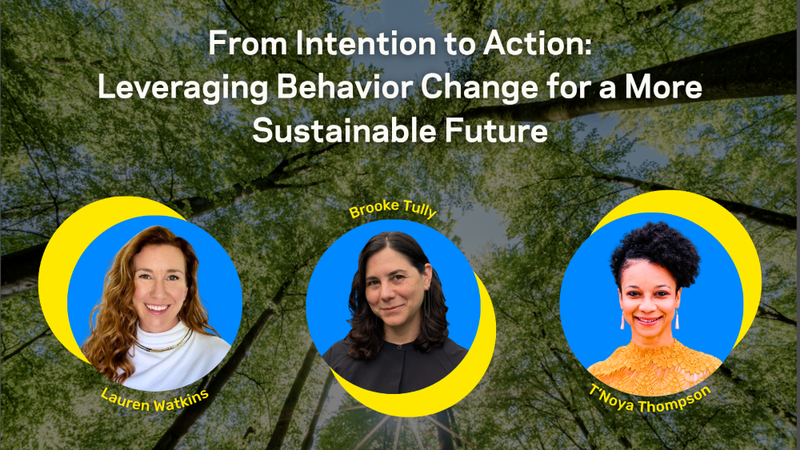
Our leadership team at Ecochallenge brings decades of education and experience to the work of sustainable behavior change.
- Co-Executive Director Lauren Watkins, Ph.D., draws on her expertise in behavior change research to explore the psychology and science behind how people form habits and make decisions.
- Co-Executive Director Brooke Tully brings a practical perspective to understanding the everyday barriers that can make sustainable behaviors difficult to adopt — and the strategies that can help make change easier.
- Board Member T'Noya Thompson, Ph.D., focuses on the connection between behavior change, organizational culture, and collective action.
In this conversation, they explore why information alone isn't always enough, what makes behavior change stick, and how individual actions can contribute to larger shifts toward a more sustainable future.
What is behavior change research, and why is it important?
Lauren: Behavior change research is the science of understanding why people do what they do, and what actually leads them to do something different. As experts in behavior change, we use strategies and theories from psychology, economics, communication, corporate marketing, and public health.
Many of us already know we should waste less, reduce our carbon footprint, conserve water, and so on — and yet knowing hasn't been enough to match the scale of the environmental issues our society faces today.
T'Noya: Even good intentions do not necessarily lead to follow-through or behavior change, so it is vital to understand the in-between — the gap.
Lauren: That gap between what we know and what we do is where behavioral science lives. Behavioral science can help us understand what else we need to move from knowing something or caring about something to taking action, building habits, or sharing what we are doing with others.
What are some of the biggest challenges people face when trying to change their behavior?
Brooke: The most common challenge is that it is simply easier not to change our lifestyles than to do so. In the world of behavioral science, this is described as status quo bias or inertia.
Most of us live our daily lives in patterns and routines we've created for ourselves. Not only are those routines comfortable for us, but they also represent efficiency since we repeat them daily or weekly. Proactively choosing to disrupt those patterns is tough and time-consuming.
T'Noya: People can also feel overwhelmed because behavior change is a connected chain of adjustments. We all feel and see this at the start of the year with New Year's resolutions; people set lofty intentions with no real understanding of how to get there.
It often takes breaking down that goal, establishing the right habits and systems, practicing discipline on days when motivation is low, and building community for accountability and encouragement.
What are some ways people can make behavior change easier?
Lauren: Setting specific goals is a great place to start. For example, "make Thursday dinners plant-based" beats "eat less meat." Track how you are doing, too, in a fun or visual way so you can watch your progress add up.
Another strategy is to design your environment so the new behavior is the easy default. If you want to line-dry laundry to save energy, the drying rack needs to live next to the washer, not in the garage.
And do it with other people. Social support and a little friendly accountability are among the most powerful predictors of whether a change sticks.
Brooke: Give yourself grace. Change is hard! Don't aim for perfection; go for progress.
I'm also a big fan of finding ways to make new behaviors more fun to do — whether that's using sticky notes as reminders or creating a fun song or slogan that helps you remember the behavior.
How quickly can behavior change happen?
T'Noya: If the behavior is clear and simple, with little to no barriers and some benefits, the shift can be quick. For example, composting at work can be done easily with the right equipment, systems, and capacity in place within an organization.
Once people start to follow the shift and the steps are clear and easy, it can become a norm at work to compost. However, composting at home might look a little different and require some failures, adaptation, and perseverance to sustain.
Lauren: What takes longer is turning an action into a habit you don't have to think about. The deeper shift, where someone starts to see themselves as "a person who does this," unfolds over time. But that identity shift is often kicked off by small early wins. You don't have to wait years to see meaningful change. You just have to start with something doable and let momentum build.
Why does Ecochallenge use a behavior change approach to support sustainable actions?
T'Noya: Ecochallenge is an organization that believes that conservation and sustainability success lie in understanding the gap between awareness and action. To support sustainable lifestyle shifts, it’s critical to help people develop a path to bridge that gap.
Brooke: We recognize that many people want to live in a way that is healthier for themselves and the planet, but feel unsure about how to start, what to do next, and which actions make the most difference.
Ecochallenge's events, webinars, and books are designed to make the journey of adopting more sustainable lifestyles feel less overwhelming and scary by breaking it all down into smaller steps and more rewarding by showing how those small steps add up to big impacts.
Lauren: For decades, environmental educators and policymakers assumed that if people understood the problem, they would act. The research is detailed that awareness is necessary, but not all that matters. People need a bridge from knowing to caring to doing.
Do individual behaviors really make a difference?
Lauren: No, recycling that plastic bottle will not solve the climate crisis. But framing the debate as "individual versus systemic" misses how change actually spreads. Two things can be true at the same time: individual actions matter, especially because they help us live our values and feel like we are trying, and systemic actions matter.
Brooke: We don't need people to adopt the behaviors perfectly, and we don't need everyone to adopt a behavior before the ripple effects of change begin. Our individual actions can, and do, inspire social movements that lead to large-scale change.
T'Noya: I believe that every positive behavior contributes to the collective when it comes to conservation and sustainability. Like the African proverb says, "If you want to go fast, go alone. If you want to go far, go together." This is the beauty and importance of Ecochallenge.
What benefits can behavior change create beyond the behaviors themselves?
Lauren: For individuals, the most striking benefit is a shift from anxiety to agency. Anxiety about environmental issues is real and widespread, and one of the best documented antidotes is meaningful action. Participants tell us they feel less overwhelmed and more capable.
T'Noya: Behavior change builds into the deep layers of culture — what we see, what we say, and what we actually believe. Rather than instructing staff to follow a new mandate based on external research, these approaches leverage shared experiences, values, and social dynamics already within the organization.
As a result, the culture shifts from within, making the change more sustainable and less likely to be resisted.
Making change possible, together
Behavior change doesn't happen through information alone. It happens when people have the tools, support, motivation, and community to turn what they know into what they do.
And while individual actions may seem small, they build into habits, influence social norms, strengthen communities, and help demonstrate what a more sustainable future can look like.
As Lauren puts it, "Individual behavior isn't the endpoint. It's the beginning of the ripple effect."
At Ecochallenge, that's the goal: to help people take that first step, keep going when change gets difficult, and see how their actions can add up when we take them together.
Does your organization have environmental, social change, or engagement goals to achieve? Join the 320,000+ people worldwide, including companies such as LinkedIn, U.S. Bank, MetLife, Microsoft, Deloitte, and more, in using the power and flexibility of the Ecochallenge program to accomplish your team’s biggest goals. Learn more.