What’s Next for Ecochallenge: Behavioral Science and the Next Generation of Collective Impact.
A conversation with co-leaders Lauren and Brooke about the science of making change doable and fun.
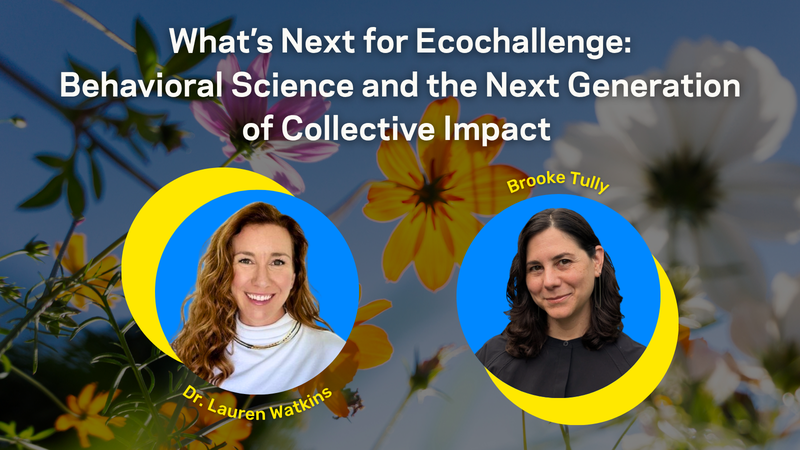
“So many people feel overwhelmed about the planet right now, and the antidote to overwhelm is action. Helping thousands of people move from anxiety to action, together, doesn't feel like a big task to me. It feels like the best use of everything I know.” —Ecochallenge Co-Executive Director Lauren Watkins
With more than 30 years of experience inspiring individuals, workplaces, and communities to take meaningful action for the planet through everyday choices, today Ecochallenge is looking toward its next chapter. New co-leaders Dr. Lauren Watkins and Brooke Tully are building on the organization’s legacy of growth and evolution with a renewed focus on making sustainable living accessible, engaging, and rooted in the science of lasting behavior change. Together, they bring expertise in behavioral science, conservation, and community engagement to a shared vision of helping people move from intention to action.
In this interview, Lauren and Brooke discuss why behavior change is essential to creating a more sustainable future, how Ecochallenge is evolving to meet today's needs, and what they're most excited to build in the years ahead.
How does your background in behavioral science shape your view of creating lasting behavior change?
Lauren: I've spent over 15 years studying why people do what they do. A hard “aha” moment I had to learn long ago as a park ranger was that information rarely changes behavior on its own. Most of us know that we should exercise more and waste less, for example, but knowing isn't the problem. Behavior change research lives in the gap between what we know and what we actually do. I find that gap incredibly fascinating as a behavioral scientist.
Brooke: I spend a lot of my time thinking about the journey of change for individuals and societies. Doing something new and different is challenging. It takes time, practice, and determination before it feels natural. Understanding what the experience of change looks and feels like helps us make it easier, less daunting or stressful, and even fun!
Why do individual behavior changes matter in our shared progress toward a more sustainable world? And if we know our choices matter, why is behavior change so challenging?
Brooke: Jane Goodall famously said, “You cannot get through a single day without having an impact on the world around you. What you do makes a difference, and you have to decide what kind of difference you want to make.” We increasingly understand and see how our daily choices impact the world around us, and most of us are itching to do something so we feel our habits, routines, and actions are truly making a positive impact.
But good intentions can be overwhelmed by stress, busyness, and decision fatigue. Behavioral science is important to our progress because when we design for how we actually operate in the world (rather than how we wish we did), change becomes much more possible.
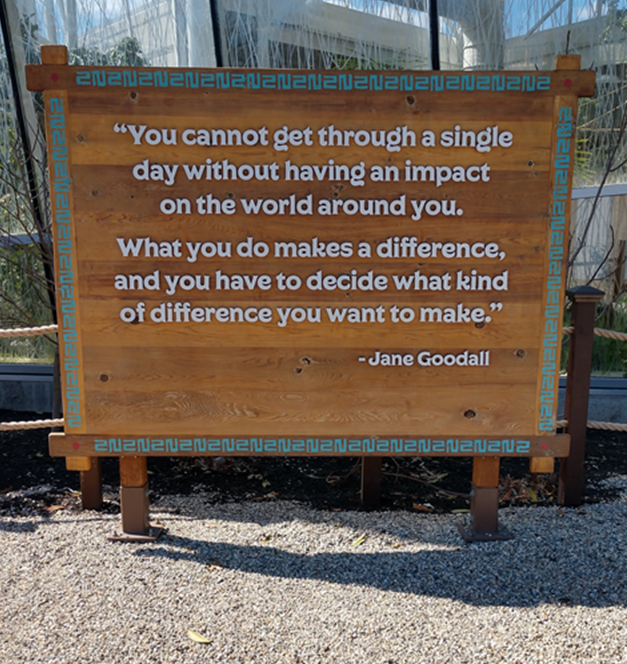
Brooke Tully took this photo after attending a workshop on building empathy for wildlife to inspire conservation efforts, held at the Roger Williams Park Zoo in Rhode Island.
Working to change thousands of individuals’ everyday habits and choices for collective impact is a big task — why are you taking it on?
Lauren: Because I've watched it work. Real change never starts with everyone changing at once. It starts with a few people, then the people in their orbit, and then it becomes just what people do. Behavior is contagious, and that's one of the most reliable findings in social science.
So many people feel overwhelmed about the planet right now, and the antidote to overwhelm is action. Helping thousands of people move from anxiety to action, together, doesn't feel like a big task to me. It feels like the best use of everything I know.
Brooke: I feel the same — I’m not sure I have much of a choice! I had a bit of an existential crisis early in my professional career while working in commercial advertising, feeling a pull to help protect the planet and its wild species. It’s been a calling for me ever since and has set me on a path focused on getting more people engaged in and activated around conservation and sustainability causes.
I carry great optimism that we can embrace and adopt more sustainable lifestyles - we’ve been doing it at increasingly fast rates over the past decade or so, and this is a trend that will only continue to grow. Co-leading Ecochallenge is an irresistible opportunity to introduce more people to sustainability, lower the barrier of entry to taking action for the planet, and help them stay consistent with lifestyle changes that appeal to them.
Given how the world has changed in the 30 years since Ecochallenge launched as the Northwest Earth Institute, how do you think the work of the organization also needs to change to approach its next 30 years? What remains the same?
Brooke: Bringing people together around sustainable living has always been at the core of this organization. The way this looks has shifted over time from community-based discussion groups to internal workplace challenges to large-scale Earth Month initiatives. Still, the central mission of creating change together remains.
Lauren: When this organization started, the challenge was awareness. People needed to learn about these issues, and gathering in living rooms with a discussion guide was a beautiful way to do it. Today, awareness isn't the bottleneck. Today, people understand what’s at stake, but they’re overwhelmed, bombarded with information from every direction. The work now is helping people act without burning out, and meeting them where they already are: on their phones, at their workplaces, in their busy lives. That's why we're investing in our digital experience and designing challenges that fit into real schedules.
What stays the same is the heart of it: people changing together. Community was the secret ingredient in those living room circles when Ecochallenge started more than 30 years ago as the Northwest Earth Institute, and it's still the secret ingredient in a corporate challenge with thousands of employees.
Brooke: Our vision for the organization's next chapter is to provide more options for bringing people together to take small, daily steps that lead to collective impact. Some of these options require us to reinvest in the digital landscape, while others involve doubling down on our roots by bringing people together and developing fresh, fun ways to connect, reflect, and act.
What are you most excited about in the coming year of Ecochallenge?
Lauren: I keep coming back to what Strava did for running and Duolingo did for learning languages. They took things that felt intimidating and made them personal, social, achievable, and fun. That hasn’t been done for sustainable living yet.
I want Ecochallenge to be the place where sustainability is something you get to do with friends and coworkers, with wins worth celebrating. That's the year ahead for us, and I can't wait!
Brooke: I’m excited to explore ways to incorporate recent findings and techniques into the Ecochallenge experience to make it easier to choose actions that fit your personal goals, make progress on the goals that feel most rewarding, and truly feel the difference those actions make, both individually and collectively.
What’s one of your favorite impactful actions people often underestimate?
Brooke: Eating your veggies! Adding a few all-veggie meals to the dinner rotation is a win-win-win. As a foodie, veggie-forward cooking has opened up my cooking skills and palate to a whole suite of tasty, creative dishes and flavor profiles I had not explored before. The major added benefits are that more veggie meals are better for my health and have huge positive impacts on the planet by reducing the carbon footprint of our meals.
What’s one of the nerdiest things you’ve done in the name of sustainability?
Lauren: I had a long streak of dumpster diving - and sometimes I still do if I see one I just cannot resist! I read The Art and Science of Dumpster Diving by John Hoffman many years ago when I worked for the Florida Department of Environmental Protection. The book got me so fired up that I convinced my co-worker with a minivan to drive a few other friends and me around so we could hop in and out at the dumpsters in our tourist town. We found everything from amazing beach gear to digital cameras to home decor. We even found some great supplies for our environmental education programs. It was such a blast that we still all talk about it - and have all admitted we still check dumpsters from time to time for some ‘free-cycling’ fun!