
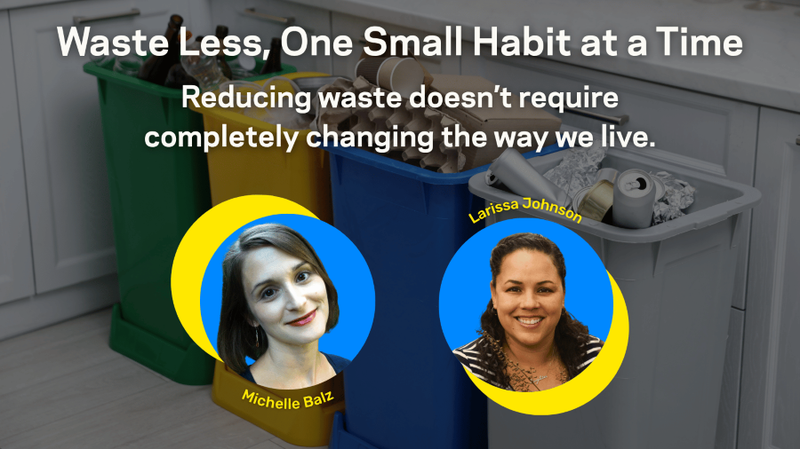
“Waste less.” Sounds simple enough, right? But waste often shows up in all kinds of places we haven’t considered: forgotten produce in the back of the refrigerator, appliances using phantom energy, bulky carryout containers that fill half the trash bin.
The good news? Reducing waste doesn’t require completely changing the way we live. One benefit of focusing on a specific sustainability topic is that it can reveal places where small changes can make a big difference.
That’s the idea at the heart of our October Sustainability Sprint. Instead of aiming for perfection, the “Waste Less, Wherever You Are” Sprint encourages changemakers to try practical actions, build new habits, and discover what works for them.
To gather some inspiration, we asked two sustainability experts with different areas of expertise for their advice:
- Michelle Balz is a food-waste expert who serves as Solid Waste Manager for Hamilton County ReSource in Ohio and is the author of No-Waste Composting (Quarto Books).
- Larissa Johnson is an energy-waste specialist who serves as Residential Energy Program Manager for the Montgomery County Department of Environmental Protection in Maryland and is the founder of Formula for Fun, dedicated to enhancing the well-being of individuals and teams through the power of laughter, movement, and play.
In this article, Larissa and Michelle offer tips for wasting less, often starting by using what we already have more intentionally.
Start by taking inventory
The principle is simple: You can’t change what you don’t notice. When it comes to reducing waste, the first step is to pay attention to it.
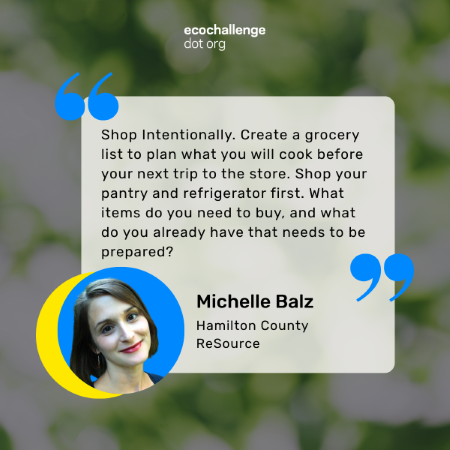
Reducing food waste starts before we leave the house, Michelle says. “Shop Intentionally. Create a grocery list to plan what you will cook before your next trip to the store. Shop your pantry and refrigerator first. What items do you need to buy, and what do you already have that needs to be prepared?”
Larissa suggests applying that same mindset to energy: Take inventory of how you use energy throughout a day or week. When are you using the most? Where might you be able to cut back?
“The average American spends 8 minutes a year interacting with their utility bill, which is usually the only time they are thinking about energy consumption,” Larissa says. “Many states have programs that provide homeowners with home energy audits, so that would be the first thing I would do if I wanted to see the number on my utility bill go down.”
Plan for what you have
A little planning can prevent a lot of waste. Planning doesn’t mean perfection.
“Planning is a good way to use less energy,” Larissa says. “Whether it’s planning your meals so you spend less time in front of an open refrigerator door OR planning your trips for errands, you can find ways to use your time more efficiently and, in turn, you will most likely use less energy overall.”
“Produce is definitely the most wasted type of food,” Michelle says. “Many people shop with healthy intentions and buy extra greens at the store that don’t end up on their plates. If you plan your meals to eat the more fragile or most likely to spoil items first (like fish or delicate salad greens), you can enjoy those items with no problem.”
Help what you have last longer
Sometimes preventing food waste is as simple as changing how we store things. “Clear storage containers make it easy to see what leftovers or ingredients you placed in them, making it more likely you will eat them,” Michelle says. “For repurposing, I love turning leftover cooked lentils or roasted veggies into a healthy sauce with a blender (regular or immersion). This is a sneaky way to get extra protein and veggies into my family’s dinner. Your freezer is your best friend when it comes to magically preserving foods to be able to eat them later.”
She also recommends learning how to store produce properly to extend its life. A paper towel in a container of lettuce can help absorb excess moisture, while storing cut herb stems in a glass of water and covering them can keep them fresh much longer. And if your greens have already started to wilt, an ice water bath may be enough to revive them.
When it comes to energy, Larissa recommends starting with conservation, energy efficiency, and weatherization before making bigger changes to a home’s energy systems. Even small adjustments, like paying attention to your thermostat or making sure your home is properly insulated, can help reduce unnecessary energy use.
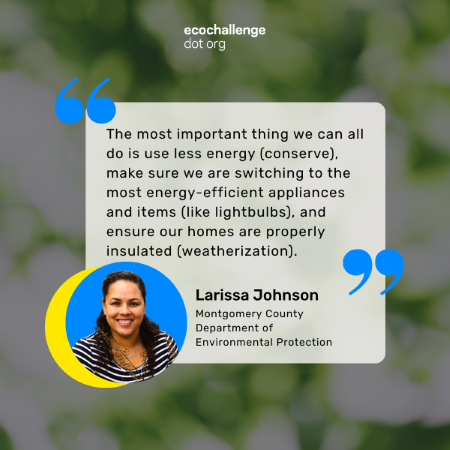
“The most important thing we can all do is use less energy (conserve), make sure we are switching to the most energy-efficient appliances and items (like lightbulbs), and ensure our homes are properly insulated (weatherization),” she says.
Look for the easy wins
Not every sustainability action needs to be a major project.
Larissa points to everyday habits like shortening your shower, being mindful of how you use hot water, and turning off devices or appliances when they don’t need to be running. She also recommends looking at the biggest sources of energy use in your home and finding opportunities to make them more efficient.
“Everything that is plugged in is drawing energy unless it is connected to an outlet that has an on/off switch,” Larissa says. “Because of that, we want to make sure that we are using energy wisely so we don’t have energy vampires.”
Michelle’s advice follows the same philosophy: shop intentionally, store food properly, use your freezer, and get creative with what you already have.
None of these actions, on their own, will eliminate waste. But together, they can change the way we think about the things we buy, use, store, consume, and eventually throw away.
Ready to waste less?
You don’t have to tackle everything at once. One key to effective behavior change is to pick one action that feels doable and give it a try for at least two weeks so it becomes a habit. Then build from there.
Ecochallenge programs are based on a foundation of behavior change science. If you’re looking to waste less, join the “Waste Less, Wherever You Are” October Sustainability Sprint for fun, easy guidance that will help you build new behaviors that will last.
With practical actions designed to fit into everyday life, you can experiment with new habits, invite friends or family to join you, and find small changes that stick.
Wasting less isn’t about doing everything perfectly. It’s about making what we already have go a little further.
Register for the October Sustainability Sprint here
The advice in this article was originally posted on BrookeTully.com. Read the full interview with Larissa Johnson. Read the full article with Michelle Balz.