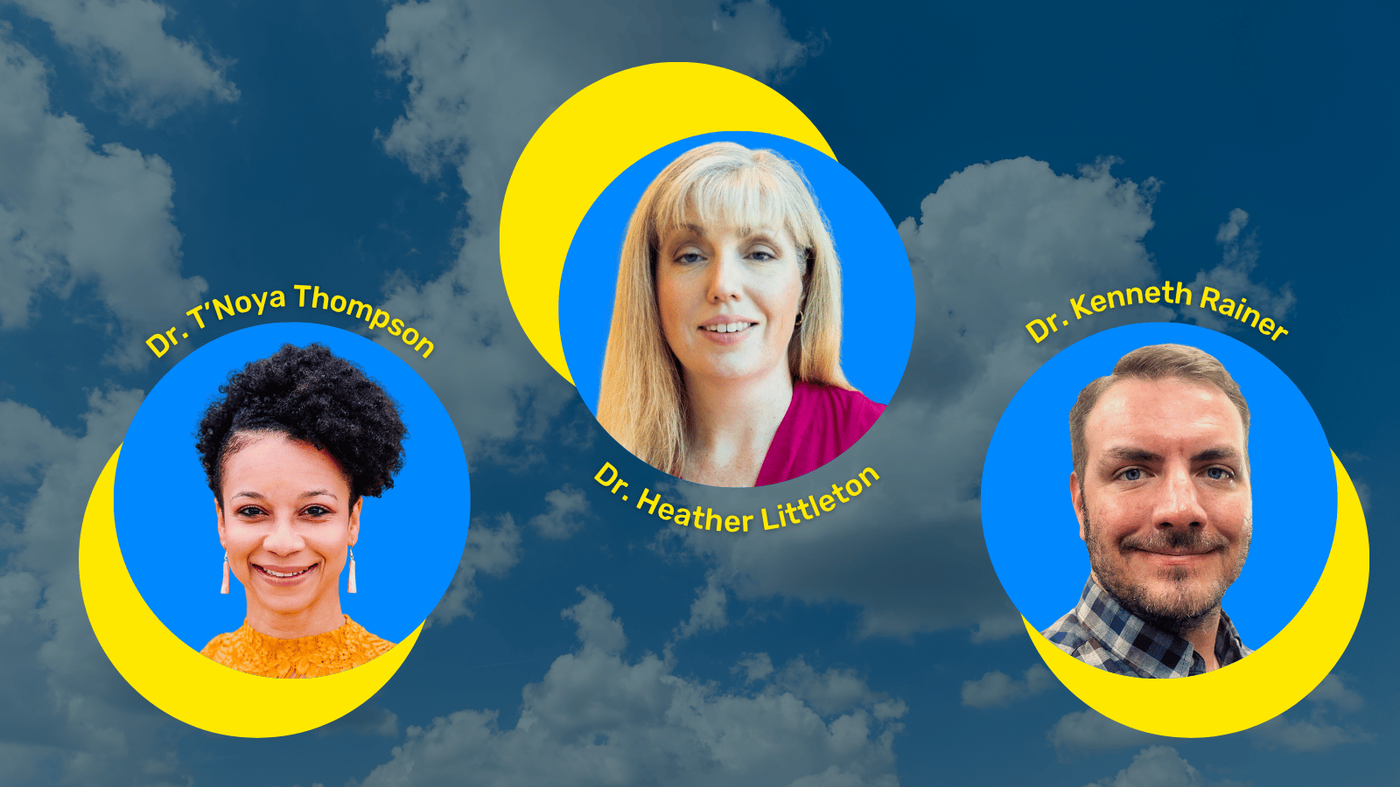
Highlights from Ecochallenge webinar expert panelists Dr. T'Noya Thompson, Dr. Heather Littleton, and Dr. Kenneth Rainer
“Resilience” is everywhere — in conversations about people, organizations, and ecosystems — but what does it actually mean? As the term becomes more common, it can also begin to lose clarity.
In this expert-led webinar, Dr. Heather Littleton, Dr. T’Noya Thompson, and Dr. Kenneth Rainer explored resilience through the lenses of psychology, leadership, and environmental systems.
- Dr. T’Noya Thompson is a consultant and senior strategist who examines resilience through the lens of organizations and leadership.
- Dr. Heather Littleton, Director of Research Operations at the Lyda Hill Institute for Human Resilience at the University of Colorado, explores resiliency through navigating trauma and stress.
- Dr. Kenneth Rainer, a consultant with Panarchy Consulting, examines resilience at the ecosystem and community levels.
Defining and Understanding Resilience
What does it mean to be resilient? Psychologists do not have a standard definition of the term, leaving it open to interpretation. Dr. Heather Littleton defines resilience as a dynamic process, rather than a personality trait.
“It's folks who are experiencing adversity, and despite experiencing adversity, are still doing the things that are important to them,” Dr. Littleton says.
Littleton's work at the Lyda Hill Institute focuses on the human experience of facing adversity, adapting to it, and showing up for what we find personally meaningful.
Dr. Kenneth Rainer agrees with Dr. Littleton and shares the definition of resilience that resonates with him and his work. “Resilience is dealing with a disturbance without permanently losing your function, structure, or identity,” he says.
Resilience at the Ecosystem and Community Levels
Dr. Rainer discusses the nature of resilience at the systemic level and its similarities to Dr. Littleton’s work at the individual level.
“I love [resilience] because it applies to multiple systems, including the environment, including our social systems,” Dr. Rainer says.
Just as ecosystems are living systems, so are organizations. Dr. T’Noya Thompson expresses the importance of framing organizations through an ecosystem lens. She says both culture and leadership play critical roles in building organizational resilience.
“As we think about the health of our organizations and wanting to do better work, we have to think about what resilience means in the context of an organization. How do we build up so that when external threats are coming … we hold our identity?” Dr. Thompson says.
Building Personal and Organizational Resilience
If resilience is not a personality trait or something we are born with, how do we build it within ourselves? Dr. Littleton highlights the importance of personal strengths, social support, and adaptive responsiveness.
“We're not just individuals. We're embedded in our communities, in our organizations, so being able to have those connections, being able to help each other when we're experiencing adversity, is really critical,” Dr. Littleton says.
Dr. Thompson emphasizes the role of diagnostics in an organization and the ability to identify imbalances and begin the conversations needed to move forward.
“We can learn that resilience is built through tension… ecosystems get to a threshold, they rest, and then they come back,” Dr. Thompson says.
Dr. Rainer highlights the need for diversity and connectivity in resilient ecosystems and organizations.
“Having diversity is so important for systems and for resilience… Humans really need to take that lesson from natural systems,” Dr. Rainer says.
Challenges to Resilience and Strategies for Overcoming Them
For a system to be fully resilient, it needs an internal equilibrium that creates the right environment for success. Dr. Rainer identifies lack of evaluation and assessment, homogenization, and rigidity as factors that can undermine resilience at the ecosystem and community levels.
“Sometimes it's intense, sometimes it's hard, but [we get there] by knowing and reflecting that there's going to be a tomorrow that we can move forward on, and having faith that as we build, we get stronger,” Dr. Thompson says.
All of the panelists agree that understanding and addressing challenges is crucial to building resilience and maintaining adaptability.
“Find things that make you feel empowered and…powerful and…capable, and do those things, because that's going to help you,” Dr. Littleton says.
This conversation highlights how resilience is not an innate quality, but something we can build - individually and collectively. Watch the full webinar here to learn more: https://youtu.be/2HKV6-HUmtU
—-
Interested in exploring our custom training webinars and workshops to bring expert content like this, tailored to your organization? We’d love to talk with you! Contact us here, and someone will get back to you promptly.
related items


From Intention to Action: Leveraging Behavior Change for a More Sustainable Future
As anyone who's ever failed at a lofty New Year's resolution can attest, changing our habits can be challenging. Hard a…

Q&A: What’s Next for Ecochallenge.
What’s Next for Ecochallenge: Behavioral Science and the Next Generation of Collective Impact. A conversation with co-l…

Building on the Power of Connection and Collaboration.
The Next Chapter of the Ecochallenge Story.A farewell note from departing Ecochallenge Executive Director Liz Zavodsky.…